
Is it still free speech if a
|

 |
Do you know what imprecatory prayer is? It's a prayer calling upon God to harm or hurt another.
A former military lawyer who served in the Reagan White House is suing a Dallas-based religious group for allegedly inciting harm upon him through prayers.
The Dallas Morning News says the suit could test the limits of free speech and prayer.
Mikey Weinstein, founder of the Military Religious Freedom Foundation, said he wants former U-S Navy chaplain Gordon Klingenschmitt to "stop asking Jesus to plunder my fields ... seize my assets, kill me and my family then wipe away our descendants for 10 generations."
The suit also asks the court to stop the defendants --Klingenschmitt and Jim Ammerman, the founders of the Chaplaincy of Full Gospel Churches-- from "encouraging, soliciting, directing, abetting or attempting to induce others to engage in similar conduct."
Klingenschmitt, who was discharged in 2007 for disobeying a superior and wearing his uniform at political demonstrations, is familiar to anyone who followed last month's separation of church and state tumult in Lodi, CA. He was a key point man supporting prayer prior to city council meets --prayer in the name of Christ, incidentally.
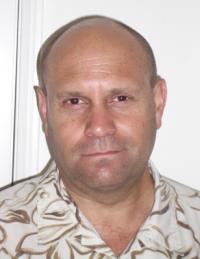 Mikey Weinstein |
Weinstein, who is 54 and Jewish, said his family has received death threats, had a swastika smeared on their home, and feces thrown at the house. He said the harassment started several years ago when he began protesting Christian proselytizing at his alma mater, the Air Force Academy.
Imprecatory prayer is not a new story, and Southern California Pastor Wiley Drake's call to smite President Obama is one of many with political overtones. The question is whether it's wise, or even Christian.
Weinstein's attorney, Randal Mathis, said their biggest concern is that Klingenschmitt's audience includes a "certain number of unstable people" who might act in the name of God.
Klingenschmitt, 41, claims he has "never incited anybody" to hurt Weinstein, whom he called a "paranoid megalomaniac who has a history of anti-Christian persecution."
"I never prayed for anyone's violence," he told the paper. "All I did was quote the Scriptures." His prayers are available on his website, the Pray In Jesus Name Project, The Evening Prayer's Channel and for radio broadcast.
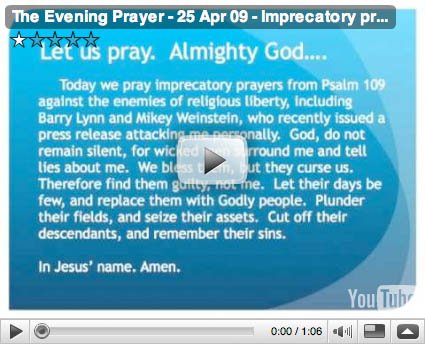
Religious law expert Douglas Laycock of the University of Michigan explains that "imprecatory," or curse prayers, are considered by the courts to be protected speech. "People can pray for whatever they want to pray for," he said.
But the question of whether such speech can be used to incite others to violence has not been settled by the courts in a religious context.
Does Mr. Klingenschmitt want Mikey Weinstein to die? "I pray the Psalm that his days are few," he told The News.
Questions
Let's leave for a moment the concepts of agnosticism and atheism. That's a discussion for another day. Let's also leave out the fact that while the Bible does make several references to curses, the Psalms were written by David, the Jewish king of the Old Testament, wherein an eye for an eye was the order of the day. This is a matter of accountability among those of power and influence, the repercussions when such influence yields a morally reprehensible result, and the responsibility of the legal system to adjudicate in such a matter with respect to our fundamental freedoms.
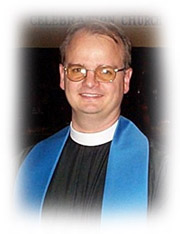 Gordon Klingenschmitt |
The danger here is, you never know who is listening, and that's especially true when you have an audience at your disposal in the way that a radio talk show host or television pundit does. We who are in broadcasting should be ever mindful of such things though we often are not. Someone will always misinterpret your words, and that could have difficult or troubling or even tragic consequences.
If someone who might be considered "unstable" acts on potentially inflammatory words, even if it's an imprecatory prayer, is that speech still protected? We have different versions of the Bible, demonstrating how different religious groups interpret the Bible differently. Knowing that even mentally sound people can derive different meaning and interpretation from the same scripture, how culpable is an individual praying that someone's days are few if a member of the flock chooses to act on it? There is great power in prayer and those who lead in prayer can be tremendously influential. With great power comes great responsibility. Is the chaplain ignoring that responsibility? If Weinstein is murdered by a less stable or more fanatical member of the flock because he interpreted the chaplain's prayer different than the chaplain claimed was his intent? Should the chaplain know better knowing that you never know who's listening?
A threat and a call to violence is not constitutionally protected. Can a prayer ever be interpreted as a threat? Where exactly is that line, and if it's crossed, who is to blame?
Within the Christian community, when will its members and the faith itself finally ask whether imprecatory prayer is even Christian-like? Christ's message in his Sermon on the Mount was to love thy neighbor, not love thy neighbor as long as he agrees with your interpretation of the faith. Even more powerful was the message to "love your enemies, bless them that curse you, do good to them that hate you."
In that respect, Mr. Klingenschmitt seems no better than the Fred Phelps' of the world (who ironically have shown up at military funerals preaching a twisted agenda). If what Mr. Klingenschmitt preaches does not accurately represent the faith and is more a reproach to the cause of Christianity, are Christians obligated to see that it stops? One wonders if such proselytizing isn't one reason there are so many non-believers in the world as it portrays Christianity in such a negative light.
Is what some Christians are doing being done in the name of Christ? Is this what Christ himself would have done? Indeed, WWJD?
And in a question that goes beyond religious boundaries, how responsible are people with a media voice if their message has the power to incite criminal behavior, and indeed someone acts criminally thereby? We may blame and charge the criminal, but should a public figure give more careful thought to the words he or she chooses before he or she utters them, or should they even care?
SUPPORT MRFF
The wall separating church and state
in the U.S. military has collapsed.
MRFF desperately needs you to
Help Build The Wall!

Without your dedicated assistance we won't make it.
You can also support MRFF by
donating funds, time, or both.
Please click below to choose how
you'd like to Support the Foundation
