

FOUNDATION VOICE (Pedro L. Irigonegaray, Esq.) – On “Spiritual Fitness,” the Supernatural, and the Constitution
Accessibility Notice
This post was created on the previous version of the MRFF website, and may not be fully accessible to users of assistive technology. If you need help accessing this content, please reach out via email.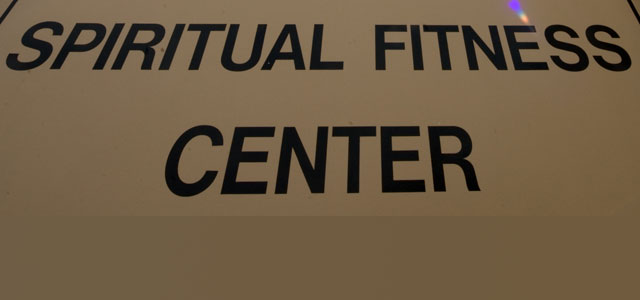
spiritual_fitness2
Today I had the opportunity to speak before a group of soldiers from the “Fighting Sixth” of the United States Army at Fort Riley. The fort’s garrison, the “Big Red One”, carries the distinguished honor of being the oldest continuously serving division in the U.S. Army, having served in an unbroken chain of military campaigns dating back to the First World War. The rich history of this unit, which has been deployed across the globe for the purpose of defending our country from enemies both foreign and domestic, embodies the unbreakable devotion to this nation’s interests which are inextricably tied to the rights which we have inherited in the form of the United States Bill of Rights.
The U.S. military’s sworn mission is the cut-and-dry, down-to-Earth goal of defending the United States Constitution. While the vast majority of soldiers understand this to be the case, a small, activist group has damaged the mission by interjecting into the Army a new concern: “Spiritual Fitness Training”. Ostensibly, the program is meant to mitigate the psychological attrition which warriors are subject to as a result of the trauma of war. However, this altruistic pretext masks the true purpose of the program: dressed in the language of pseudo-scientific language, the program is designed to undermine the secular doctrine which countless American soldiers have died to defend. “Comprehensive Spiritual Fitness” is a brazen attack, albeit an asymmetric one, on the First Amendment to the United States Constitution.
In short, the injection of spirituality, a supernatural concept, into the doctrine of an organization geared towards land-based military operations is an aberration; it contradicts the very essence of the Army’s mission. Spirituality deals with spirits and the supernatural, angels and deities, a subject which is best handled by individual faith and not government dictate.
I conveyed to my audience the irrefutable fact that the Military Religious Freedom Foundation (MRFF), of which I am an Advisory Board Member, has been unflinching in its devotion to highlighting, and rectifying, the grave errors in jurisprudence which allowed for the foisting of this “Spiritual Fitness” regime upon the brave men and women in the U.S. Army. I was proud to bear the honor of representing, my friend, the president and founder of MRFF, Michael L. “Mikey” Weinstein, a man whose bravery and grit would make him easily feel at home among the best that the “Big Red One” has to honor. Mr. Weinstein has for many years tirelessly devoted his efforts and resources safeguarding justice, equality, and respect for our constitution.
I am confident that the brave women and men with whom I shared my views at Fort Riley now know that MRFF’s fight is not against any church or any denomination in particular; rather, our fight is against the anti-constitutional forces attempting to make spirituality a part of the Armed Forces mission. Our efforts to protect religious liberty within the Armed Forces are intended to safeguard a delicate balance, the separation of church and state, a principle which ensures our democracy’s ability to survive and in doing so protects the individual’s right to worship or not as they personally find appropriate.
The author, Pedro L. Irigonegaray, Esq., is a civil rights attorney and member of the MRFF Advisory Board. He is an active and participating member of the Topeka, Kansas, Florida, and American bar associations; Kansas Trial Lawyers Association; Association of Trial Lawyers of America; American Inns of Court; and Trial Lawyers for Public Justice. He is also a fellow of the American College of Trial Lawyers.
Recent Posts
- October 9, 2026 | 6 comments
- October 5, 2026 | No comments
One Comment
Comments are closed.
I am a supporter of the MRFF and firmly believe in the separation of church and state. Howevere, I do not agree with Mr. Irigonegaray’s assessment of spirituality as a subject of the supernatural or that it “deals with spirits and the supernatural, angels and deities…”. Spirituality, in my mind, is the subject of an individuals self respect, self worth, and sense of belonging, be it to their military unit, family, or religious organization.
I am an atheist, and a soldier, but I have a great of spirituality, in that I believe in myself and in my country, and in our mission to defend the constitution against all enemies, foreign and domestic. Spirituality in my life revolves around the strength, within me, of the human spirit, not the holy one.